Friday, February 20, 2009

A Pottle o' Brains

Today I went on a story-ramble through a nice old pile of library books and - wouldn't you know - I found a hidden gem: a story that made me smile, and made me think.  Actually, it made me downright puzzled for a while.  What on earth is a "pottle"????
                                                                           
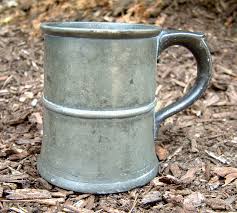
A pottle, you ask?  First off, if you have to ask, you obviously are neither a) from Lincolnshire, England, nor b) extremely elderly.  If you were, you'd know right away that a pottle is a unit of measurement, referring specifically to a measure of volume of about 2 quarts - about the amount which could be contained in an old-fashioned tankard of beer, such as you'd see in one of those quaint old prints of English country life.  (Take a moment to enjoy "The Sea Captain John Oxenham Enjoying a Tankard of Sack with His Fellow Sailors" by N. C. Wyeth.  For more on John Oxenham, read chapter 7 of "On the Spanish Main" by John Masefield)


Note the tankards.

Still with me?  Wondering what on earth I found so entertaining about an obscure antiquated English form of measurement?  Turns out, it is a crucial detail in a very interesting and entertaining little tale, which features, among other things, a noodlehead.  Here goes:

                                                                          
A young fool, tired of his own stupidity, decided one day to remedy the situation.  He went to a wise old woman, known for her herbal remedies and general cleverness, and asked her if she could give him - wait for it - a "pottle o' brains". Unfazed by this unusual request, the woman instructed him to bring her the heart of whatever he loved most, and she'd see what she could do.  Hey, how hard can it be to fix a dimwit?

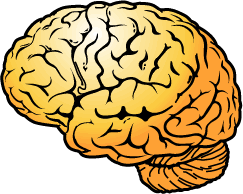
   Brain          +         Pottle           = Smartypants
               

Filled with hope, the idiot went home to his mother, with whom he lived, and thought for a while, before deciding that there was nothing for it but to slaughter his mother's fattest hog, since he could think of nothing that he loved more than bacon.  The next day, he brought the dead hog's heart to the wise woman, and she posed him a riddle: What runs without feet? The poor young dolt thought and thought, but had no answer.  The wise woman determined by this that he hadn't brought the right heart and sent him home to try again.

The despondent dummy cried all the way home, and on his way a young woman stopped him and asked him what the trouble was.  He explained and - here's where the story really gets interesting - she offered to marry him!?!   
                           
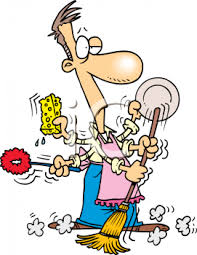
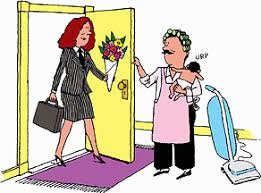
Now, before you go and assume that we now have TWO numbskulls to contend with, consider this: before she proposed to the dope, this smart gal asked him a) if he could cook, clean and mend her clothing, and b) whether he would mind if she was the wage-earner for their household.  Amazingly, our village idiot revealed himself to be a regular Martha Stewart in the home, and moreover, he was elated at the prospect of not having to try to make a living as the other men in his community did.  The two decided to get hitched the very next day, eager to enjoy the benefits of a non-traditional marriage arrangement.
         
However, when the dimwit went home to announce his engagement to his mother, she became so upset at the prospect of her son marrying a woman who did men's work and refused to keep house that she DIED.

 

Right there, on the spot, finis.  One can only imagine how the poor idiot wept at the sudden shocking demise of his only parent.  Thinking back on how tenderly she had cared for him, fed him, clothed him, tolerated his incurable stupidity, the fool wailed and sobbed and mourned his terrible loss.  When suddenly it occurred to him that his mother was the one he loved best in all the world - even more than bacon - and he had another shot at getting his "pottle o' brains"!
                                            
Don't worry, there is no Frankenstein scene; the idiot decided to simply bring his dead mother - heart and all - to the wise woman and attempt to get his pottle.  Whereupon she asked him another riddle: what is shiny and yellow but is not gold?  Not surprisingly, the moron had no clue, and left as empty-headed as before.

After burying his mother, the idiot married his sweetheart and the two were very happy together.  He happily cooked and cleaned, while she cheerfully went out to work and earned a very good living.
All was well, except that the fool still secretly yearned to be smart.  One evening, gazing at his wife, he realized with a start that she was the one whom he loved best.  Taking a risk, he admitted to her that he still craved brains (sorry, couldn't resist), but loved her so much that he wasn't sure how he'd ever get them, since he couldn't bear the thought of killing her to get a pottle for himself.  The wife suggested that they visit the wise woman together and see what they could do, but her moron husband doubted she could solve the wise woman's riddles, and told her the two puzzlers she'd already posed him.  His wife, to his amazement, immediately answered them.

What runs without feet?  Water!
What's shiny and yellow but not gold?  The Sun!               

Impressed by his wife's intelligence, the dork agreed to go again to the wise woman and try for his pottle.  He presented his wife - heart included - to the wise woman, who asked him a third riddle: What has no legs at first, then two, and then four?  The dummy turned to his wife hopefully, who told him the answer, which he then told to the wise woman.

A tadpole!                  

The wise woman asked him if he knew the answers to her other riddles; the idiot grinned at his wife and proudly told the answers.  The wise woman grinned at the cute couple, and informed the dummy that he now had his pottle o' brains, which were being kept safe in his wife's head, where they belonged.  The moron and his wife went home, and lived happily ever after.               
                                                                      

So, what's the moral(s) of this peculiar little tale?  Here are a few ideas.

1) In marriage, it doesn't matter so much who does what, simply that the important stuff gets done.

2) Being smart is nice, but love is even nicer.

3) A man who can vacuum is worth his weight in gold.

(With apologies to my very dear and VERY smart husband, who happens to be an artist with a vacuum.)

Monday, January 5, 2009

First Night 2009, featuring "Stories From The Stoop"

For First Night 2009, Andrea Lovett and I along with Norah Dooley and Laura Lovett put together and filmed a series of performances by children from the Franklin Park Tenants Association of Dorchester (we call this troupe "Stories From the Stoop") and teenagers from the Prospect Hill Academy, where Norah teaches. 

Here are several of the stories that Andrea and I have been teaching our kids for the last couple of months. We had a really good time, and I think the kids did, too. Thank you so much, Norah, for videotaping this terrific event.  Happy New Year!


This Persian-Iranian story is called "No Doubt About It".  Stanley, Nikhia and Khy-Asia helped me to tell this tale of a boy, his parrot, and a simpleton.


Eric and Stanley helped me tell this Scandinavian pourquoi tale called "Why Bear Has a Short Stumpy Tail", in which sly Fox has some fun at Dopey Bear's expense.


Andrea and the kids told their favorite story of all, "Baby Louise and the Ghost with One Black Eye".  This popular American ghost story has been told in various guises for years, and our troupe really made it their own!

Friday, December 5, 2008

Shingebis

My latest story-craze is - no surprise to those who know me and my cell phone ringtones - a duck. Not just any duck, mind you: a merganser duck, called Shingebis.  
                      (This one is a hooded merganser.)

It should come as no surprise that I like ducks.  They are cute, waterproof, and they make great noises.  What's not to love?  But Shingebis takes waterfowl to a whole other level.  

The tale of Shingebis is Ojibwe (Chippewa) in origin, and it is set by the shores of Lake Superior during winter time.  Shingebis - typical of animal protagonists found in folk tales and legends around the world - has both bird and human traits.  He goes diving in the frigid lake water for fish, like any self-respecting merganser - but then he takes his fish to the snug winter lodge he has constructed himself, and eats them there, seated by a roaring fire.  

Shingebis, through no real fault of his own, has a formidable nemesis: the North Wind, known to the Ojibwe as Kabibonooka or Kabibonokka.  The North Wind - an irascible curmudgeon of the worst sort - takes pride in his ability to freeze water into ice, bring snow, and drive away all the birds from the Lake for the duration of the cold season.  All, that is, except Shingebis! Looking down on this cheerful and mildly anthropomorphic duck going about his business with no concern for wind and weather, North Wind feels stimied and disrespected.  A battle of wills ensues, with Shingebis emerging as the unlikely victor.

Like so many of my favorite heroes, Shingebis is an underdog (underduck?) who does not conform to the classical heroic mold with which we are accustomed.  He is not big or particularly powerful, in fact, his strength lies in his ordinariness and his authenticity.  He triumphs simply by being true to his essential nature, and by refusing to be bullied.  

When the North Wind blows snow on him, Shingebis ruffles his feathers and shakes it off. When the North Wind freezes the Lake, Shingebis makes a hole in the ice and keeps on fishing. When the North Wind blows his way into his lodge - rather like the Big Bad Wolf! - Shingebis merely sits by the fire and waits.  The North Wind beats a hasty retreat when he finds himself melting - à la Wicked Witch of the West - in the heat of Shingebis's fire, and the little duck returns to his routine, unruffled.  
                              (The Wizard of Oz is perhaps my favorite movie of all time.)
In the battle between the Duck and the Blowhard, it comes as a relief when the duck prevails and emerges from the conflict unscathed, shaking snow off his well-oiled feathers "like water off a duck's back!" as my mother always says.

Thursday, November 6, 2008

Stories from the Stoop


Last night (Wednesday, November 5th), I managed to descend a bit from my post-election high and return to my Storytelling responsibilities.  This included co-running (with fellow-teller Andrea Lovett, and her daughter, writer Laura Lovett) a wonderful performance of new young Storytellers and Writers from the Franklin Park Development Tenants Association, at the Egleston Square Branch Library, in Roxbury.  We titled the performance "Stories from the Stoop", after Andrea's fond memories of her childhood, when she and other kids in her neighborhood would gather on the front steps of their homes and tell tales.

For the program, the younger kids (who Andrea and I have been working with for the last six weeks) presented their Group-Tellings of two very different folk tales.  One was a North American ghost story called "Baby Louise" narrated by Andrea, featuring Shaunice, Nydea, Khyasia, and Destiny.  
The second (narrated by moi) was an  Iranian-Persian folk tale called "No Doubt About It"- featuring a clever boy and his parrot, and two suspicious but gullible townsfolk -  starring Stanley as the Clever Boy, Nikhia as the Supposedly Magical Parrot, and Eric and Lehms as the Easily-Fooled Townsfolk (see picture below).  They were all terrific, and Nikhia's parrot voice did me proud!


In addition to the two Group-Tellings, Laura's young ladies impressed us all with some excellent readings of their brand-new poetry and short stories.  The kids also took turns demonstrating their expressive storytelling skills in our favorite game "Walks of Life".  Each of them used pantomime and facial expressions (no voice or sounds) to imitate an adult practicing their chosen profession, leaving the audience to guess at what job they were portraying.  We had so much fun that one of the Moms got up and got into the act!

Our audience of parents and siblings was warm and supportive, and they laughed at all the right places!  A fun time was had by all, and we are SO thankful to Juanita Pitts of the FPDTA, the staff of the Egleston Square Branch Library, and the parents of all of our young Storytellers! We are very proud of how well all the kids and teens performed last night, and look forward with eager anticipation to their performances at First Night on December 31, 2008.

YES WE CAN!

Thursday, October 23, 2008

The Hairy Toe

I love this story so much, and was so inspired by the unnamed girl who told it in the YouTube clip I posted recently, that..............

I told it at Toscanini's in Central Square, for MassMouth's third MouthOff!


Hallowe'en is on its way!  All Hallow's Eve, Samhain, All Saints, The Celtic New Year, Tout-Saints, whatever you want to call it, it's my favorite holiday of the year.  Sure, I love Three Musketeers bars and wearing costumes as much as the next person, but Hallowe'en is about more than just free candy and the chance to wear a wacky outfit in public (I live in Cambridge, Mass. for crying out loud; people dress oddly here all year round!).

Hallowe'en offers us the opportunity to hear and tell scary stories.  The ones that bother us, make us jump, and otherwise provoke unusual reactions.  Our relationship to these creepy tales is ambivalent; monsters and ghosts are scary, but being afraid can feel almost delicious under the right circumstances.  I find that the following equation is virtually foolproof:

cozy couch + purring cat + hot cider + scary story = marvelous fun

I've found that reading, hearing and telling scary stories can help us to recognize that our fears provide us with common ground; we may not agree with each other about politics, or how to solve world hunger, but we can all agree that Dracula, Mega Sharks, and Zombies are very, very scary.  The things that frighten us all can bring us back in touch with our common human vulnerabilities.  And sometimes they can help us to laugh at ourselves just a little bit.

Boo.

Thursday, October 16, 2008

Story Telling: The hairy toe.

Just in time for Hallowe'en, here is a terrific version of one of my favorite spooky stories, as re-told by a spunky kid!